ADIDAS COPA WARP
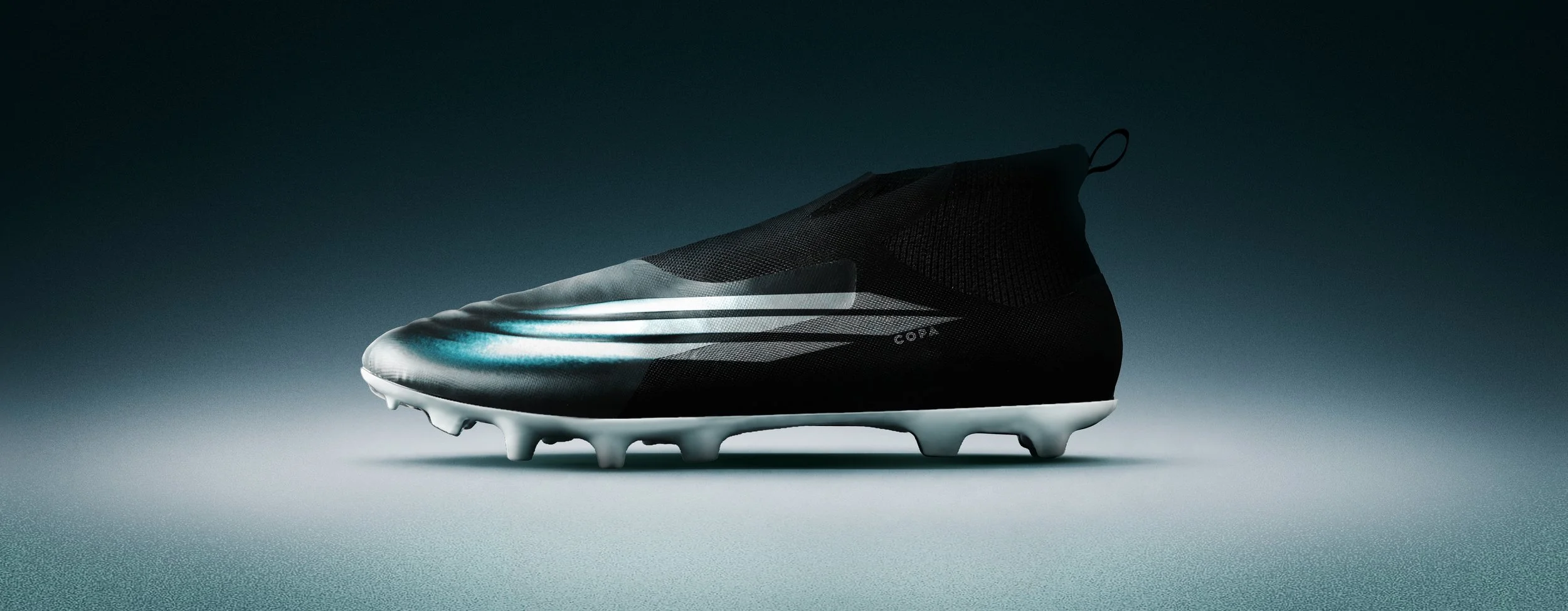
The ADIDAS COPA WARP is a conceptual soccer cleat for a new generation of COPA
2026| Personal Project
Skills: Sculpting, Fusion 360, KeyShot, Adobe Suits

Brand Analysis
Introduced in 1979 and designed with the 1982 World Cup in mind, the adidas Copa Mundial became one of football’s most enduring boots. Its soft leather construction, simple silhouette, and focus on touch remained largely unchanged for decades, establishing Copa as a symbol of traditional craftsmanship and control. In the late 2010s, adidas began reinterpreting that heritage through lighter materials, knit construction, and laceless designs—evolving Copa from a timeless leather classic into a modern performance platform.

Play Maker Heritage
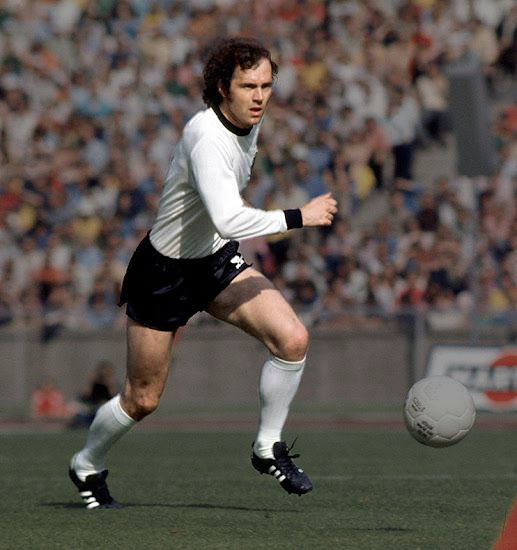
Franz
Beckenbauer
1964-1984
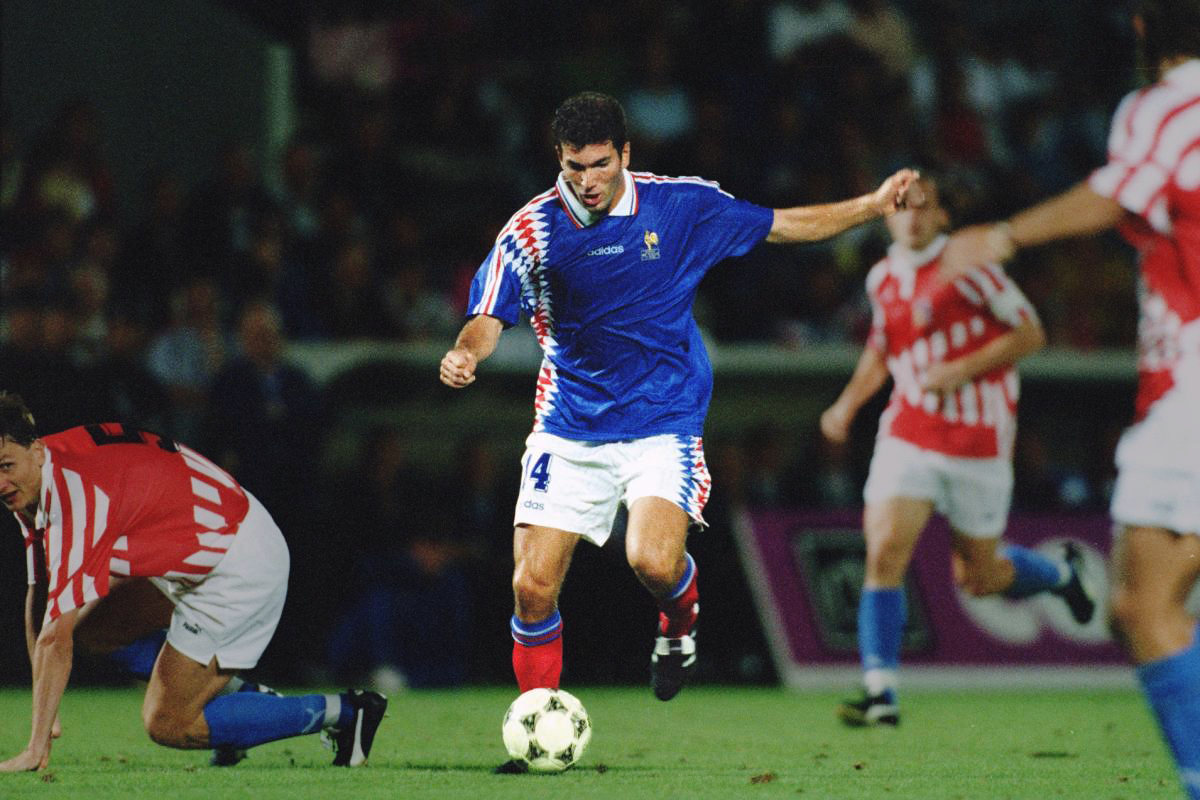
Zinedine
Zidane

1989-2006
Declan
Rice
From Beckenbauer to Zidane to Rice, the Copa has remained present through generations of an evolving game. Each player represents a different era of football—shaped by new demands in speed, movement, and expression. Copa Warp builds on that legacy, carrying the identity of the Copa forward for the modern player.
2015-Present
Design Opportunity
Leather and knit have evolved along different paths within football footwear. Leather has remained valued for its soft touch, adaptability, and ability to mold naturally to the foot, while knit has emerged as a lightweight solution for creating closer fit, controlled stretch, and improved lockdown. As the game continues to become faster and more dynamic, the opportunity lies in combining these attributes—preserving the natural touch associated with leather while introducing the fit and containment offered by modern knit construction.
Touch
1
LEATHER
Soft + natural
Fit
2
Molds over time
More controlled
Stretch
3
High over time
Midfoot / quarter
Best Use
4
Forefoot
KNIT
Thin + responsive
Immediate adaptive wrap
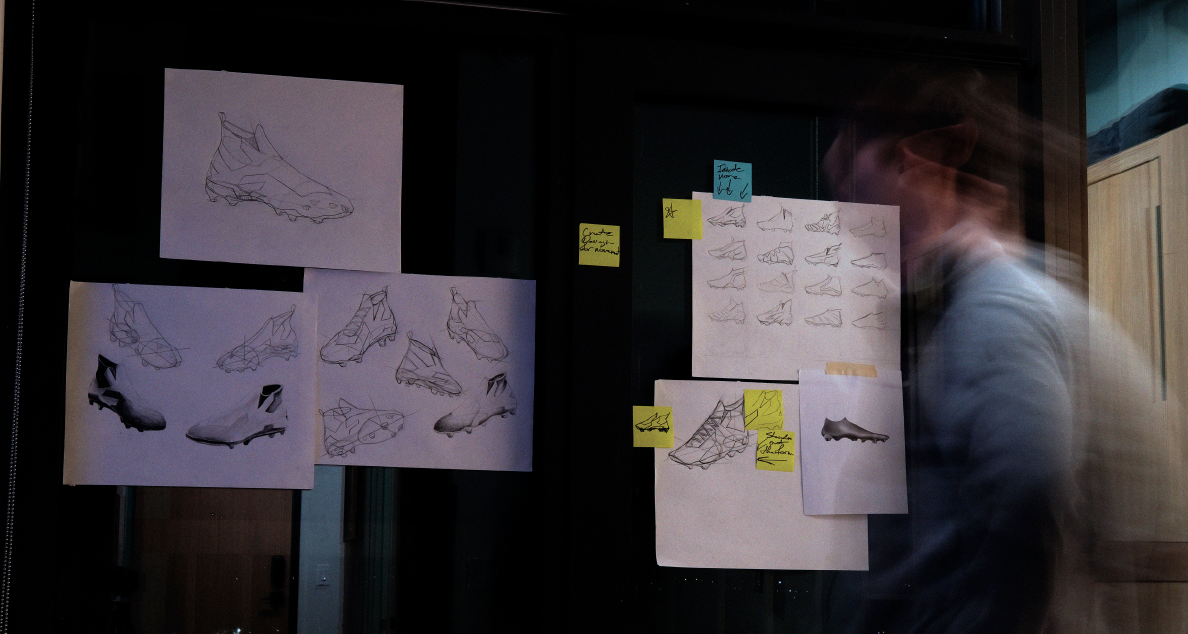
Design Ideation

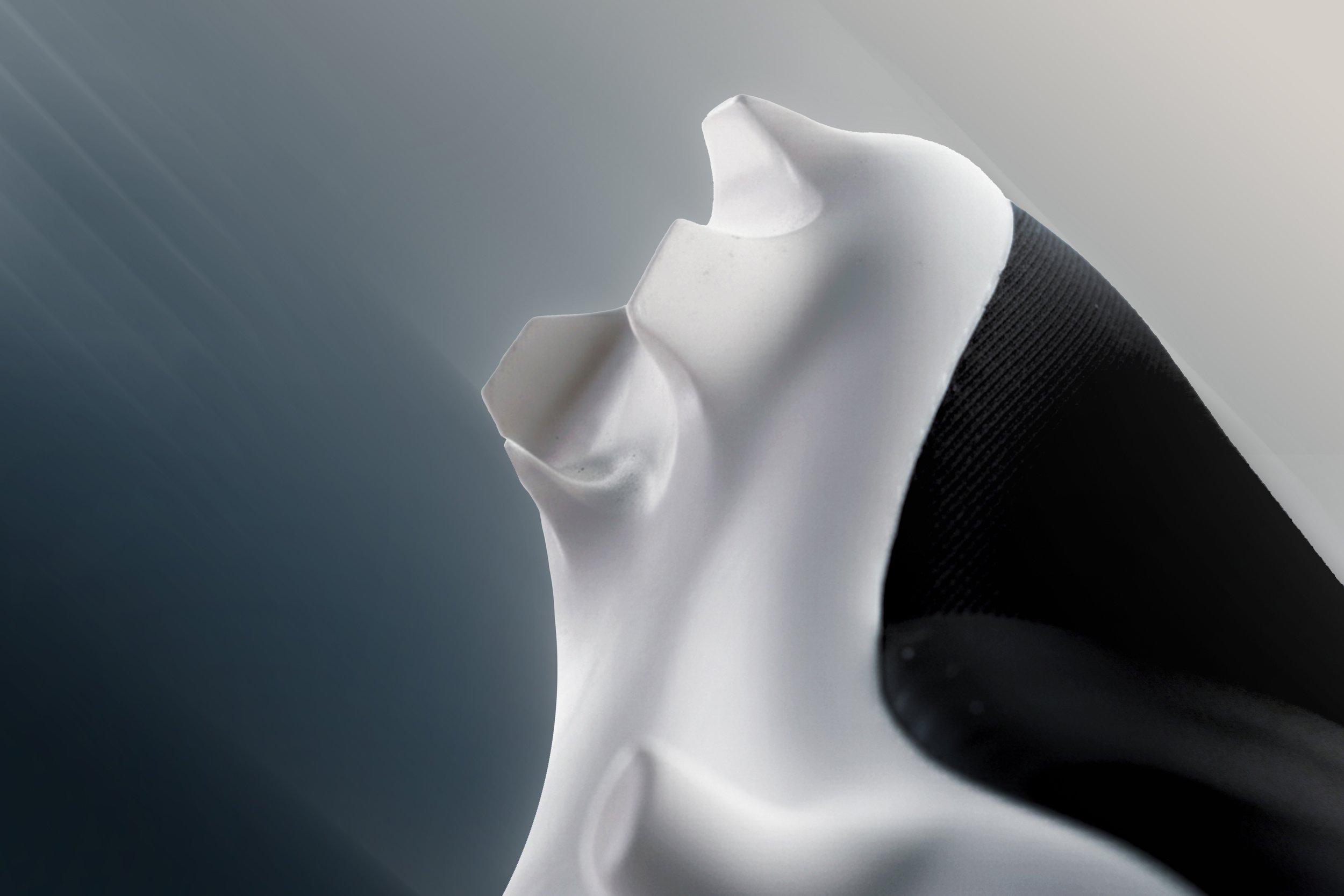
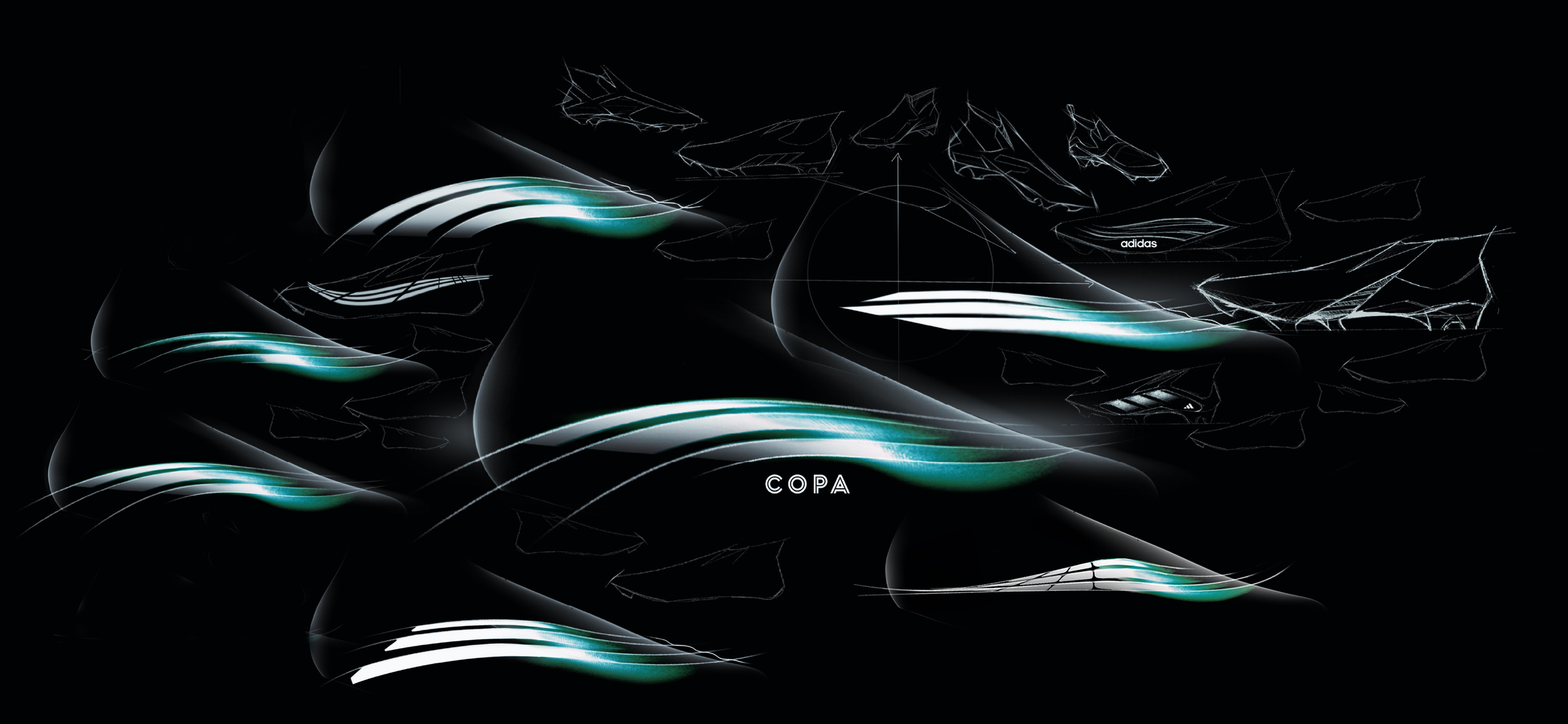
The transition from the /// into the knitted toe-box rolls is intended to unify brand identity with functional performance. Rather than applying the stripes as a separate graphic, they are pulled forward and transformed into the sculpted ridges that define the Copa forefoot. This creates a continuous visual flow from midfoot to toe while reinterpreting one of the Copa’s most recognizable design elements through a more modern, integrated construction.
Upper Break Down
Upper Development
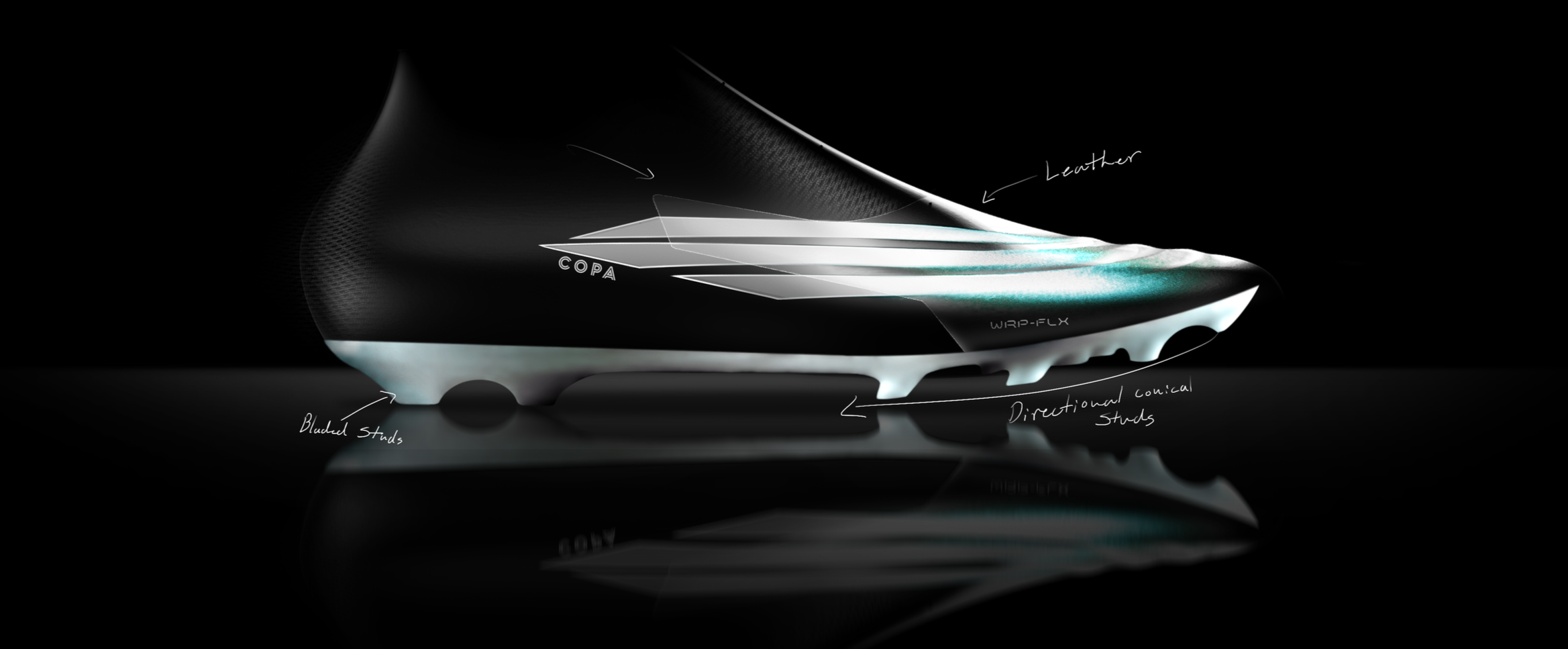
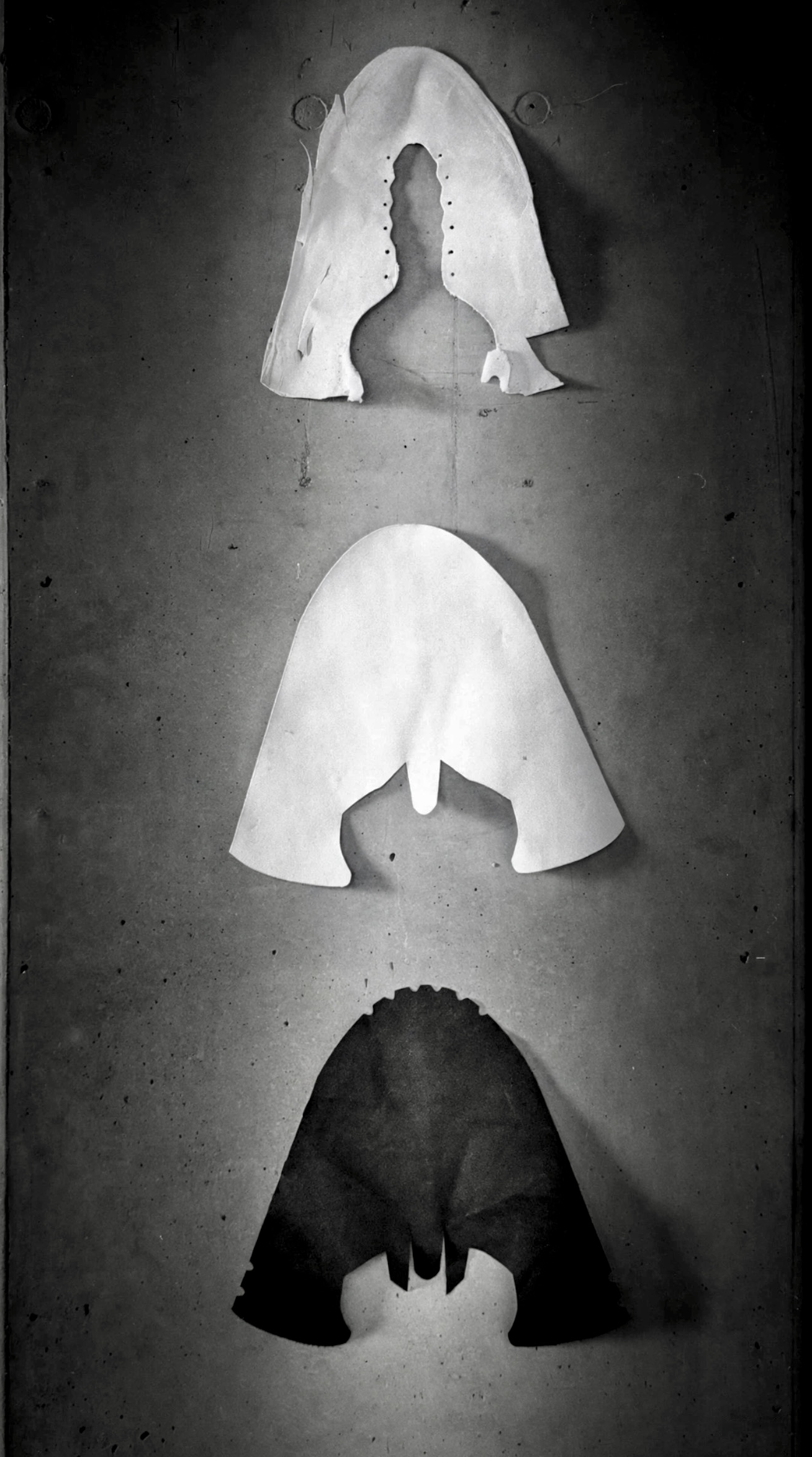
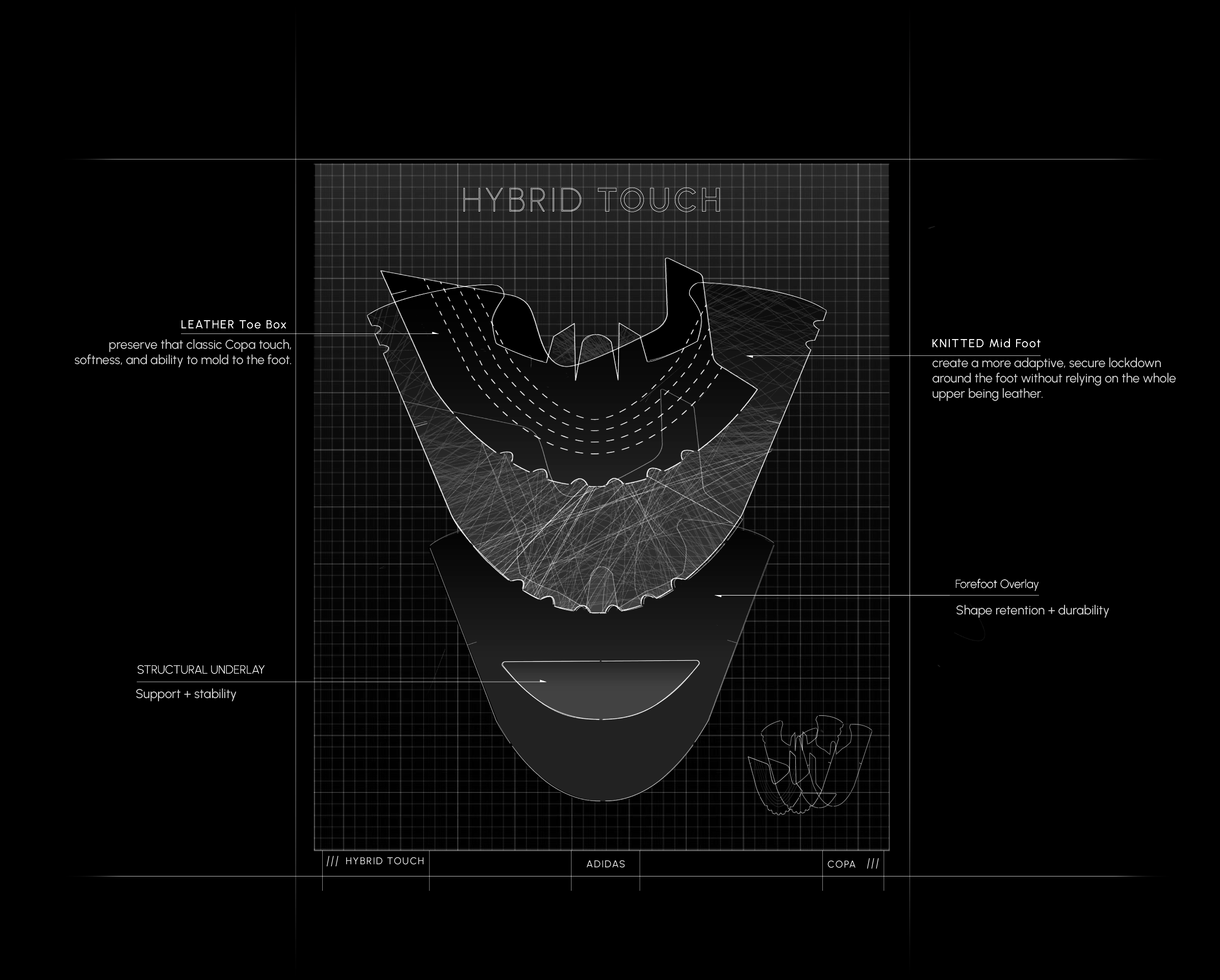
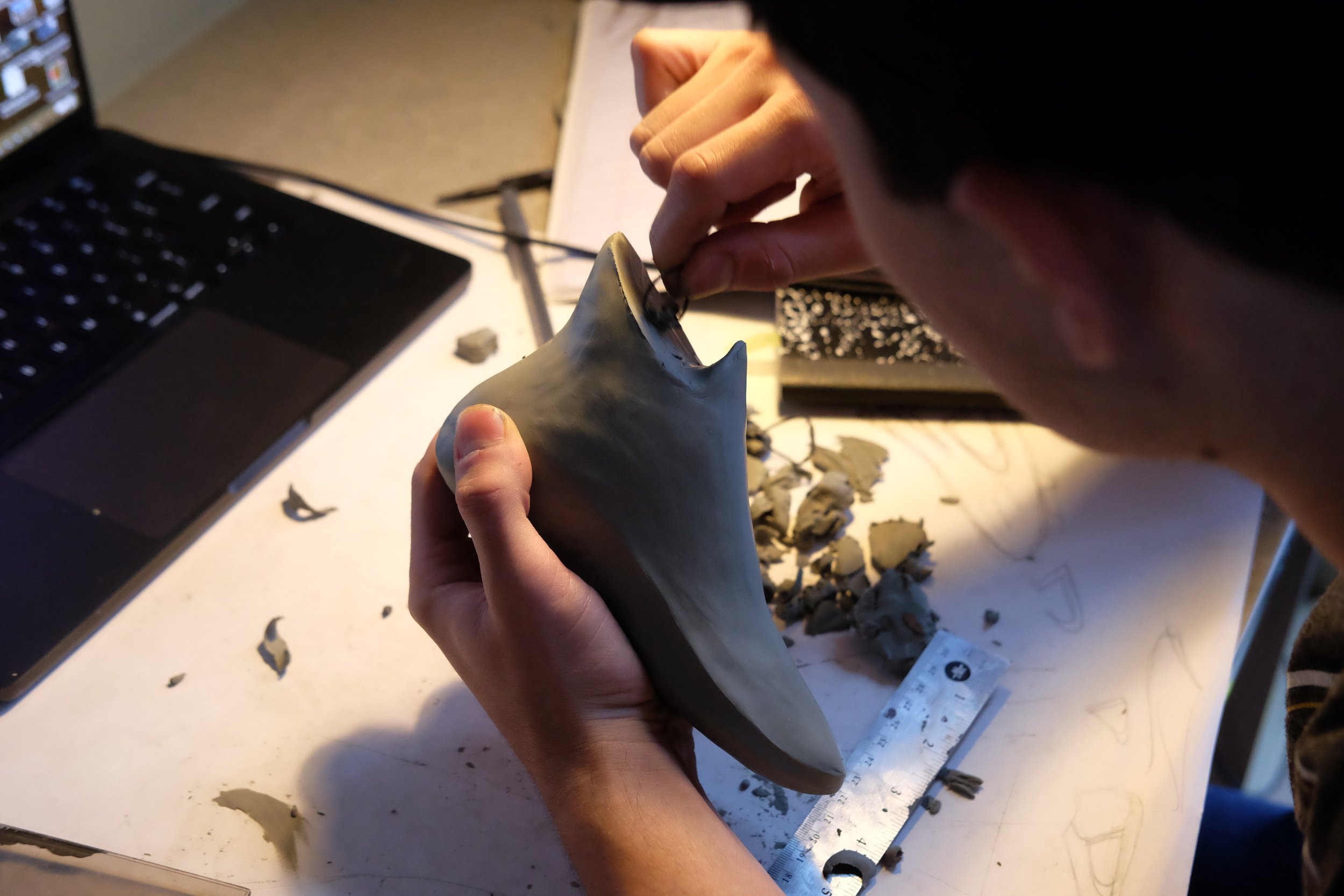
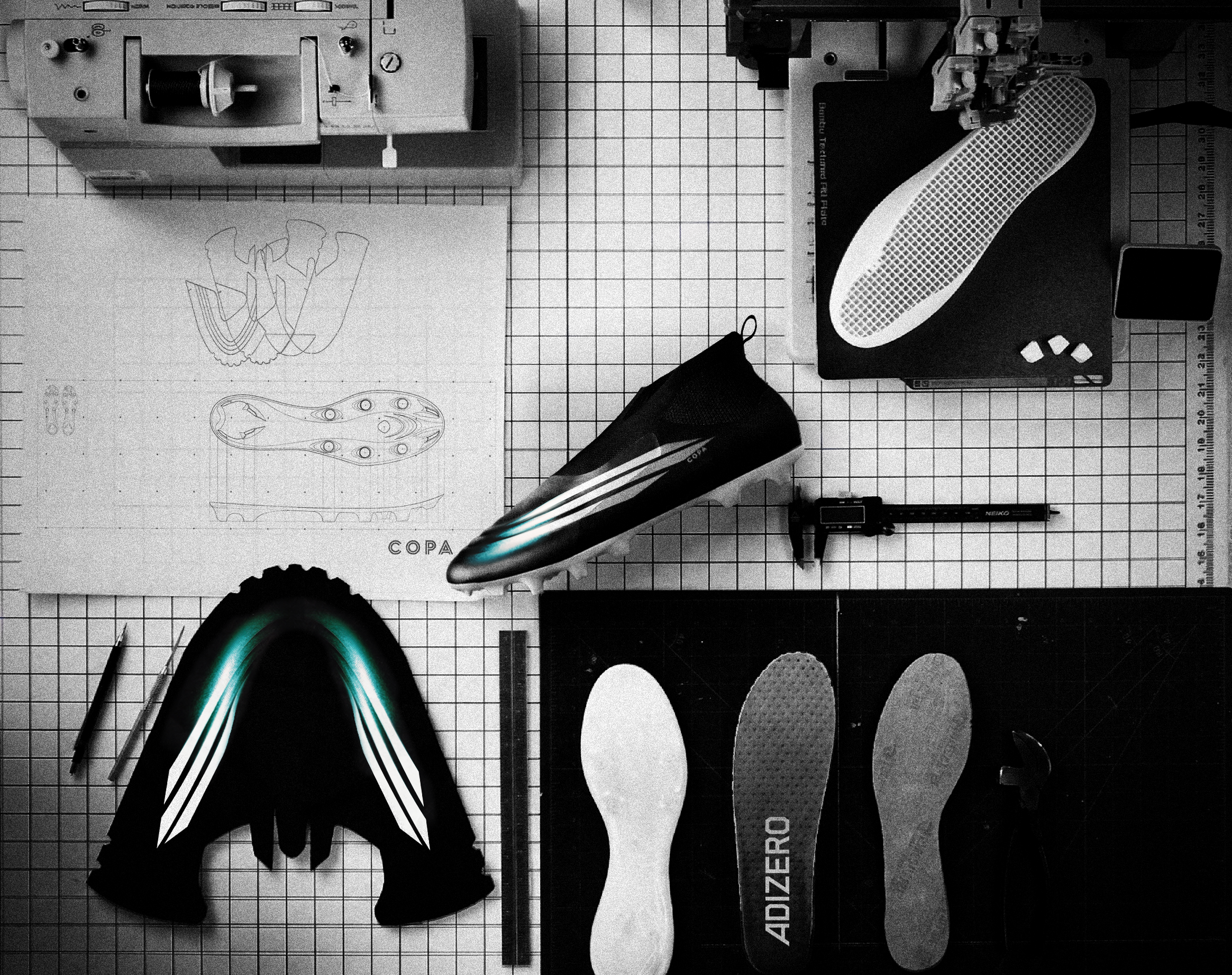
The upper was developed around a hybrid material approach, using each material where its performance benefits were most useful. Leather was retained through the forefoot to preserve the soft touch, natural feel, and adaptive fit associated with the Copa, while engineered knit was introduced through the midfoot and quarter to improve lockdown and reduce the long-term stretching of a full-leather upper. Together, the materials create a faster break-in and more secure fit without sacrificing the traditional touch that defines the Copa.
STUD ITERATIONS
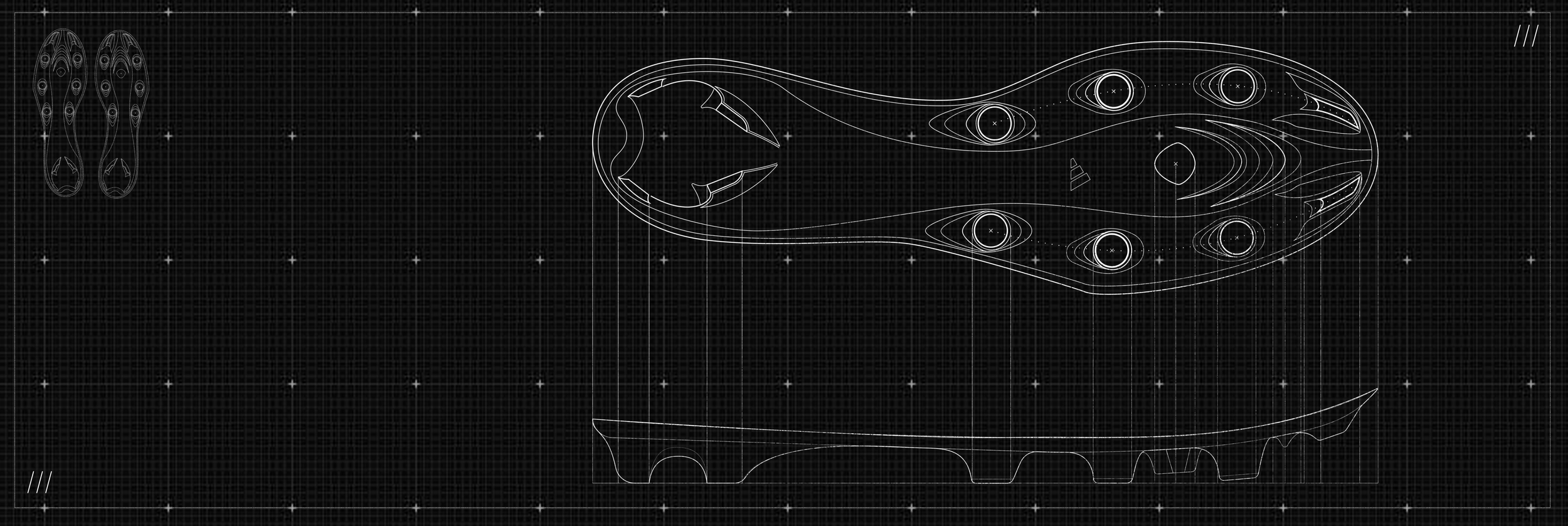
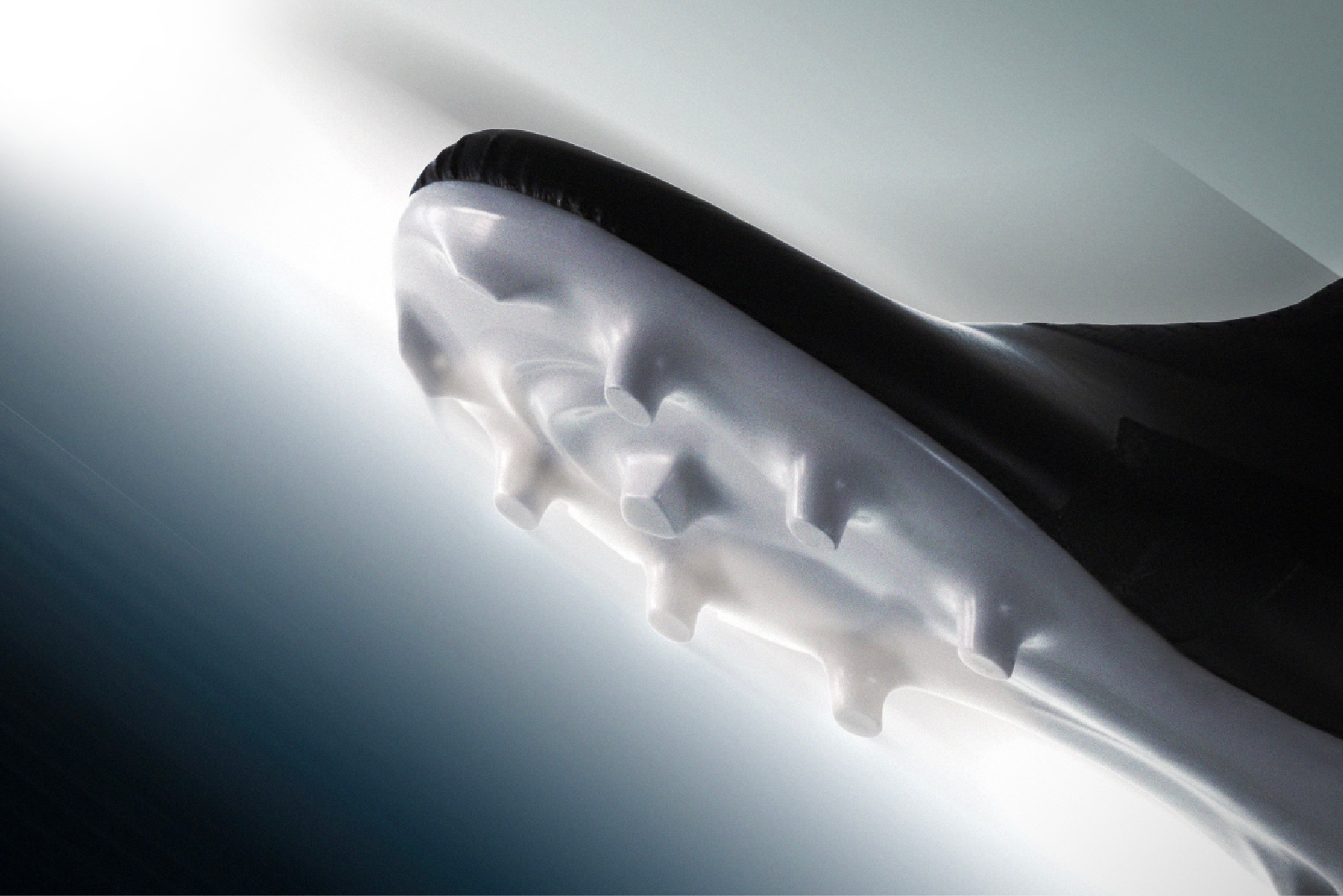
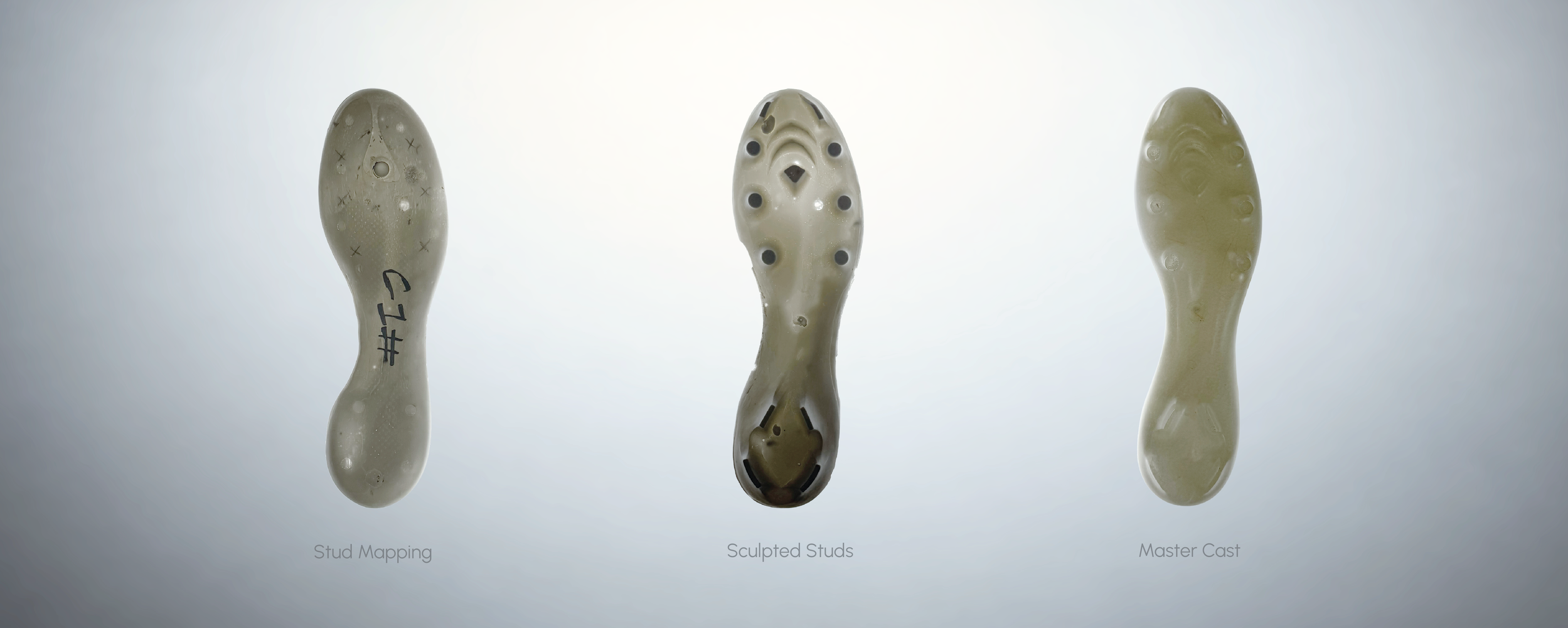
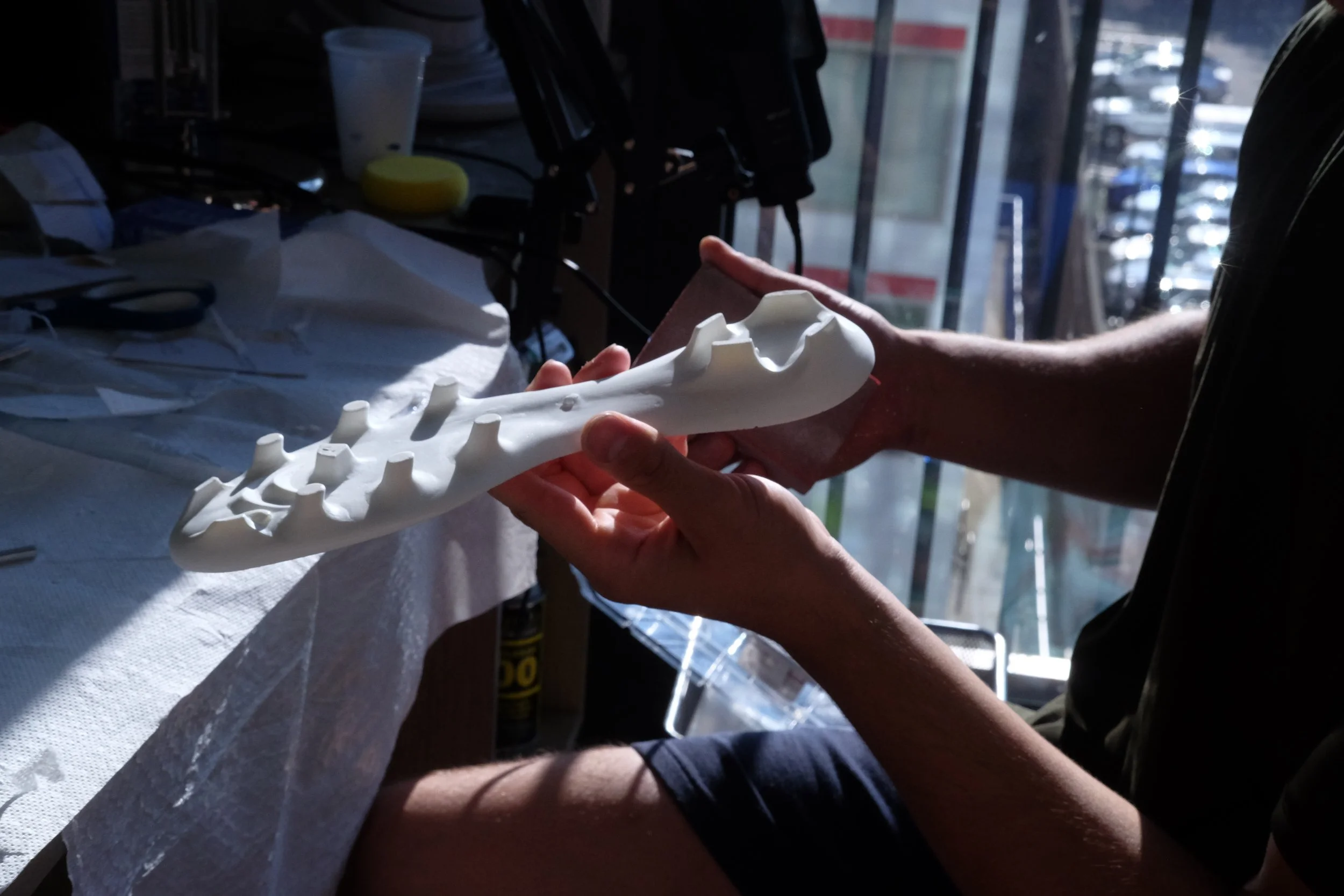
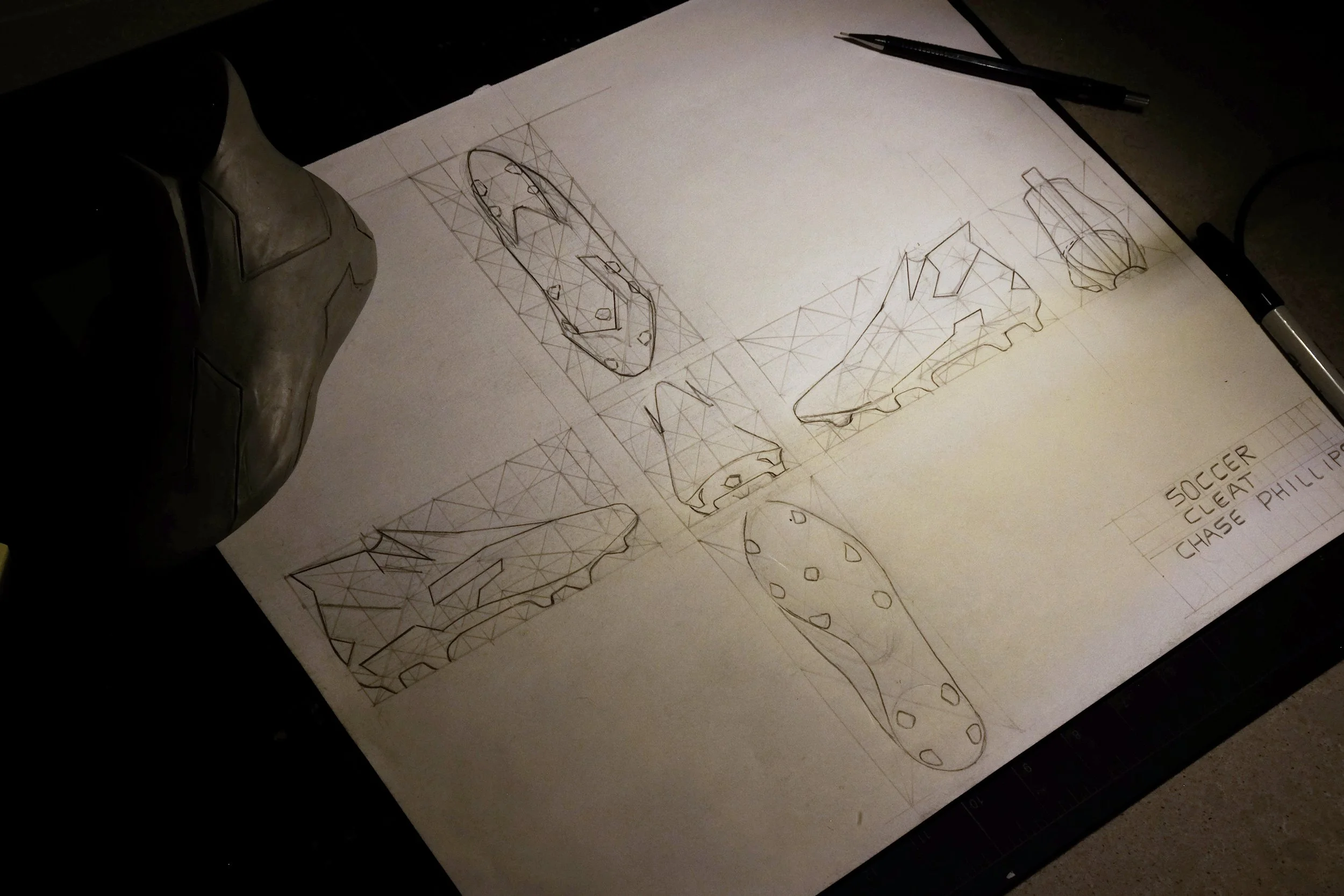
The stud configuration was developed to balance acceleration, rotational freedom, and quick changes of direction. Directional bladed studs were positioned to provide stronger traction during push-off and cutting, while conical studs were introduced in key areas to allow the foot to pivot more naturally without feeling overly locked into the ground. The rear studs reinforce stability and agility, while the central diamond and forefoot ripple elements support toe-off and forward drive. Together, the layout creates a hybrid traction system designed for speed without sacrificing maneuverability.


Final Form